APA | SD & MOPA present: Bruce W. Talamon, Nov. 12th


BTC1000-20 Stevie Blur 1981

© Bruce W. Talamon

APA | SD & MOPA Present:
Bruce W. Talamon: ‘A love letter to the Music’
An online event Thursday, November 12th, 2020 at 6 p.m.

APA | SD & MOPA welcome Bruce Talamon for a photographic talk and presentation discussing his book ‘Soul R&B Funk from 1972-1982’. Talamon will share stories from behind the camera while covering various artists such as James Brown, Donna Summer, Marvin Gaye, and Stevie Wonder.

About Bruce W. Talamon:

Bruce is a photographer from California. He grew up in South Central Los Angeles.  His cameras took him around the world. Music, Editorial, Movies. He worked for People Magazine and was a Contract Photographer for Time Magazine. For forty-one years, he worked in the film industry as a Motion Picture Stills Photographer.

But before that, he photographed R&B Royalty from 1972-1982. It changed his life. On September 12, 2018, Taschen Books published BRUCE W. TALAMON: Soul, R&B and Funk Photographs 1972-1982. There have been numerous photo books on Jazz, Rock & Roll, the Rolling Stones, David Bowie, Elvis, and Dylan. There has never been a photo book published on Soul, R&B and Funk Music… until now.

Taking a photograph of a singer on stage is the easy part. The hard part is gaining the trust. From 1972-1982, Bruce Talamon was documenting the rehearsals and sound checks, the recording sessions and costume fittings, the quiet moments, life on the road, and of course the wild photo sessions and memorable performances.

Alone with the artists before taking the stage, or seconds after the last song, Bruce Talamon had total access and was never asked to put his camera down. He was there when they exhaled. From the smoke filled clubs on Crenshaw Boulevard and the Sunset Strip in Los Angeles, to the largest arenas across the world, his camera recorded the frenzy and beauty of the music. He photographed all the usual subjects.

With almost 300 photographs, personal reflections and two essays, this book is a love letter to the music. It is a visual period in Black Music that lasted way past the midnight hour and will never come again.

Bruce Talamon’s work has been exhibited in the Brooklyn Museum, Corcoran Museum, Grammy Museum, Rock & Roll Hall of Fame Museum, Hammer Museum, and the Museum of Contemporary Art in Los Angeles. His work is in the permanent collections of the Museum of Fine Arts, Houston, the Studio Museum of Harlem, the Nasher Museum of Art at Duke University and Centro de Arte Dos de Mayo (CA2M) in Madrid, Spain.

2019 was a busy year. He completed his third film for Tom Hanks as his Stills Photographer on the Universal Pictures feature film “News Of The World”, directed by Paul Greengrass. He was invited to join the Fahey / Klein Photo Gallery in Los Angeles and the National Portrait Gallery in Washington, DC selected his photograph of Earth Wind & Fire as one of six portraits for the 2019 Portrait of A Nation Prize.

Currently, he is researching the visual legacy of African American photographers during WWII. He is also editing a book project celebrating African American Stills Photographers in the Motion Picture Industry.

Bruce Talamon is the fortunate husband of the writer and National Public Radio commentator, Karen Grigsby Bates. They live in Los Angeles and have one son.


Join us for a special online event ‘A Love Letter to the Music’ on Thursday, November 12th at 6 p.m. For more details and to register click here.

Not a Member? Our annual memberships start at $50! Join Now!

Thank you to our sponsors:

APA-SD Sponsors George's Camera, Nelson Photo, Museum of Photographic Arts


MEET. Morgan DeLuna

morgan-deluna
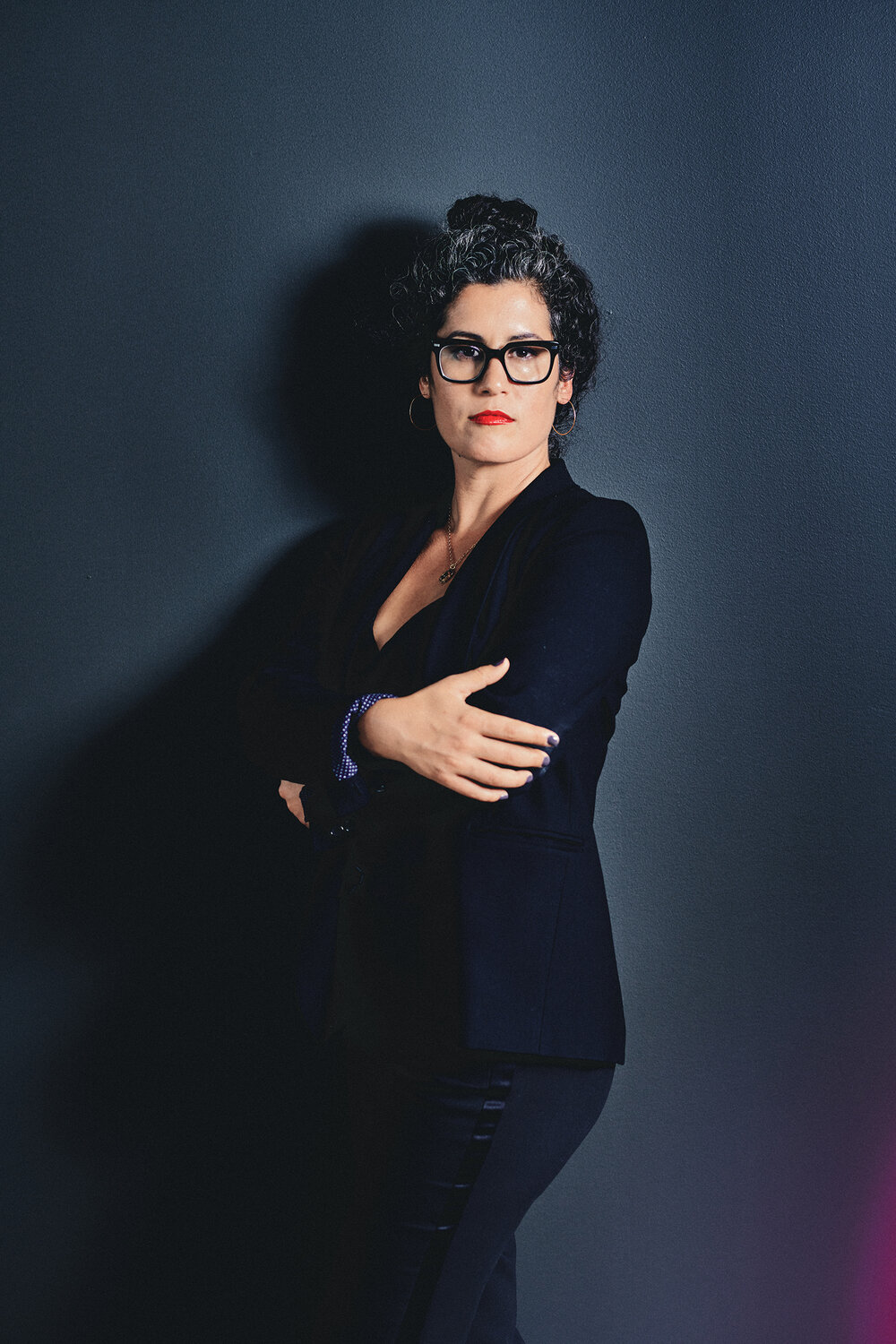
© Morgan DeLuna

Meet San Diego based Photographer, and APA member, Morgan DeLuna.

What 3 words describe your photography style?
Poignant
Conceptual
Multifaceted

What do you listen to when you’re shooting?
I am crazy about pretty much every style of music, but it depends on the work. When I am photographing someone else, I let them put on whatever they’re into and allows them to feel at ease and confident. I shoot my self-portraits alone, so I select music that puts me in the right headspace for the image I am working on. I could be playing anything from Kitarō to Queen, Marvin Gaye, or Dom La Nena. Setting up the studio is usually something to get my energy up like Classic Rock or P-Funk, for shooting and editing, the selection shifts to the tone of work at hand.

What inspires you?
I am inspired by mystery, wonder, and transformation. I’m hyped anytime I get to perceive reality in a new and fascinating way. It could be environmental, like experiencing a new place, or intellectual, like learning about new ideas in science and history.

What’s your favorite thing about being a photographer?
The challenge of creating a visual that communicates feelings and ideas without words…I do also love that little flutter of excitement when you realize you got the shot.

When you aren’t making photographs, what other pastimes do you have?
I like to keep busy. I enjoy reading history and non-fiction books. Before the pandemic, I would spend hours at the library picking out way too many books to bring home. I spend time outdoors and take drives to the desert to stargaze. I dabble in blending essential oils for skincare. Lately, I have been re-watching seasons of RuPaul’s Drag Race, Schitt’s Creek, Bob’s Burgers, and various standup comedy specials because I love to laugh.

Describe your daily or weekly work habits. (Pre-Covid and currently)
I begin every day with meditation and yoga. I am more creative in the later hours, so I use the mornings to tend to the business aspects of things. I take care of phone calls, meetings, emails, website updates, writing, submissions, social media, and so forth. In the afternoons, I’ll read, research, and sketch ideas. I also print and make natural light images at that time of day as the light in my studio is best then. I reserve the evenings for studio photography and editing. Pre-COVID, I would visit galleries and museums midday, and exhibition openings in the evenings. Now that things are virtual, I look at shows throughout the day.

Who were your biggest influencers?
My biggest influencers come from different aspects and times in my life. I was a theater kid and fortunate to work for years with a wonderful director, David Braddock, who studied under Marcel Marceau. From David, I learned how to use gesture and body language to convey an emotion or a story in silence. It takes patience, pacing, and thoughtfulness. I utilize everything he taught me when creating images today.
Annie Leibovitz is another one for me. Growing up, my Grandmother would pass along last month’s fashion magazines when the new ones arrived; I would pore over those pages for hours. Annie Leibovitz’s’ photos were my favorite. I loved her color palettes, compositions, and lighting. I think her single light work reminded me of stage lighting which, really appealed to me and became nicely saturated in my mind. Around this same time, I discovered makeup artist Kevyn Aucoin. I became very interested in makeup illusion and fascinated by beauty culture. I would look at the portraits in Kevyn’s books, Making Faces and Face Forward, religiously. After 23 years, they are still on my bookshelf. Later on, I became influenced by Frida Kahlo, John Singer Sargent, Flor Garduño, Imogen Cunningham, and Harry Callahan.

What was the best piece of advice you were given starting out?
I was struggling with a creative project when a friend and former teacher, France Marie-Haeger, gave me some guidance. She told me that sometimes there is nothing wrong with the idea, but with the medium. This advice freed me. I began exploring the concept and the aesthetic as a partnership rather than trying to jam an idea into a self-imposed mold. I allow the aesthetic to be fluid and work with the idea.

What were you doing before you became a Photographer?
I was working at a gym to pay for art classes and supplies.

If you weren’t a Photographer, what would you be doing?
I am an artist to a fault, the medium or form would be different, but I would still be creating. Art is my language, my soul.

What do you do when you get stuck?
Stuck for me equals too in my head, passing judgment on my ideas instead of just trying them out. When that happens, I ask myself “Where is the fear?”, ” What is the thought that is stopping you?”, then I either journal, meditate or go for a walk to work it out.

To view more of Morgan’s work you can follow along here.

Untitled 2020: Meet Our Judge Rosey Lakos

Photo by Bryan Derballa

Rosey Lakos is the Director of Photography at Godfrey Dadich Partners, an innovative storytelling firm based in San Francisco. She curates and produces visuals for editorial and commercial clients ranging from National Geographic and the ACLU to Nike, Google, and IBM. The work may take the form of a magazine, a billboard, or everything in-between. Prior to GDP, Lakos was an integral part of the WIRED photo department where she produced award-winning feature and cover shoots. Before working in editorial, she managed the production of exhibitions, books, and global artist workshops in the fine art photography studio of Todd Hido. A photographer herself, Lakos has a valuable understanding of the craft and is delighted that she has been able to create a fulfilling career from her obsession with the medium. She has also served as a judge for numerous competitions, including American Photography 35 and SPD 54. Lakos has formed a strong network of award-winning photographers across many genres yet is constantly looking to partner with emerging talent and offers 1:1 portfolio reviews and coaching to POC/BIPOC photographers. When not shooting blurry oceanscapes on her vintage Rolleiflex, Lakos is often in the kitchen experimenting with fanciful cakes (or, farther afield, riding a horse over a mountain). She holds a BFA in photography from California College of the Arts.

MEET. Rosey  Lakos

Which photograph do you wish you owned if money was no object?

Well that is a very difficult question, because there are so, so many. But when I think of owning a piece I think of what I would want to live with and what would continue to intrigue me every day. I saw a piece by Dawoud Bey right before lock down called Untitled #25 that is a moody dark waterscape that I still think about. I would be happy to live with that one every day. 

What is your process when selecting a photographer to work with?  

Well it’s not always a linear process, and there are so many factors that narrow down possible options such as location, style and budget right off the bat. I am looking for someone that not only has the right technical skills, but also a personality, and attitude that will bring added value to the collaboration. Sometimes I get an immediate vision for how I see a story or brief coming to life and will think of a photographer whose work I know that would be a good fit right away. But that isn’t enough, because I am very conscious of my responsibility, and my privilege. Creatives are in decision-making positions, and have hiring power to determine how a story will visually come to life, and how it will be seen by hundreds of thousands, if not millions, of people. It’s our job, and our opportunity, really, to shape and broaden what that looks like, not only by what is shown in front of the lens, but also by who is behind the camera. So I will push myself to dig deeper, keeping in mind how the photographer’s experience is going to add to the visual narrative. There are so many layers to the process, especially when working on an advertising campaign, that it really is like being a matchmaker. 

What is your preferred method for a photographer to reach out to you?

I will never be mad if someone sends me an email. I can’t guarantee that I will get back to them right away, but it definitely doesn’t hurt. Other platforms like IG and LinkedIn are not ideal. And I always love a good piece of mail, maybe a bit less so during a pandemic, but normally I really enjoy receiving a beautiful printed object I can hold in my hands. 

What makes a great photograph and what is your process when selecting images?

There are so many different things that can make a photograph great, but there is one thing that I feel all great photographs have in common, and that is the ability to evoke emotion. So I trust my heart first and foremost, and make sure that when I am looking at work I am tuned in to the gut reactions I am getting. I like to do one round of this kind of “listening” to do an initial sort of contenders, then I like to step away and come back to it in a few hours or even the next day to narrow down further. 

ENTER NOW